
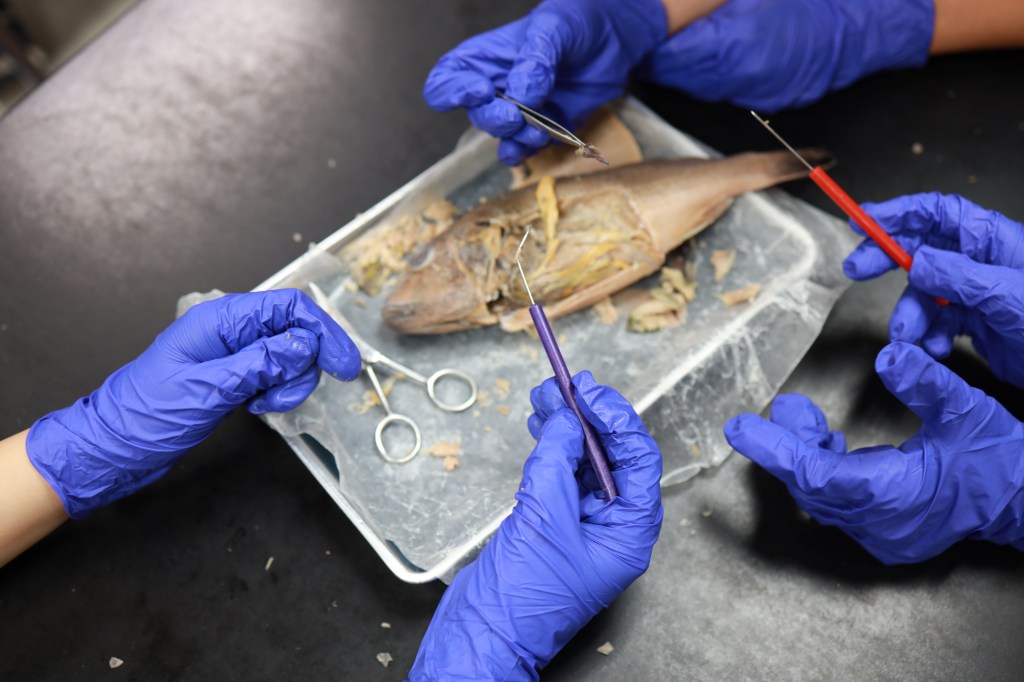
The sound of a snap echoes as a student pulls on their gloves. Metal tools clink against the tray. Then comes the wet, unsettling squelch of a scalpel slicing through flesh. Squish, squash. These are the sounds of the zoology elective, where students dissect animals, collect biological specimens, and study anatomy up close—sometimes way too close for comfort.
Jonathan Terrel, the zoology teacher, says dissections are more than just cutting things open.
“The purpose of a dissection is so that students can look and get a firsthand experience looking at all these things that we’ve learned about, the different organs, the body systems, and see them for themselves,” Terrel said.
For some students, the class is an unexpected favorite.
“I used to not want to be in zoology, but it’s actually really interesting,” said eighth grader Victoria Arias. The dissections are fun, so now it’s one of my favorite classes.”
“I would never have learned so much about unique animals if I hadn’t taken zoology,” seventh grader Fallon Guerro said.
For Terrel, zoology is more than just facts; it’s about seeing the world differently. That’s why he has every student memorize a quote from French Impressionist painter Camille Pissarro, “Blessed are those who find beauty in humble places where other people see nothing.”
Students in zoology class use scissors, probes, and scalpels to carefully cut through muscle and tissue, uncovering the hidden structures inside. As the scalpel slices into the dogshark’s pale, rubbery belly, a thick, fishy scent rises while the blade pushes through layers of muscle. When the stomach is opened, tiny, jagged fish bones spill out, clinking softly against the tray, a reminder of the shark’s last meal.
“The advice I have is to make your notes as clear as possible, always have a pencil, and be ready for your appetite to be spoiled sometimes,” Guerro said.
Over time the class became Arias’ favorite despite disliking it at first. Through zoology, Arias found a love for dissecting.
“It has made me consider being a surgeon when I grow up,” Arias said.
Terrel’s love for zoology stemmed from his father.
“My father was a veterinarian growing up, so he taught me a lot about animals and I spent a lot of time outside,” Terrel said.
Terrel knows the impact his class can have. After eight years of teaching, he still gets emails from former students telling him how much they appreciated zoology.
“I had a student once email me about some tiny insect they saw, and they were so excited because they actually knew what it was,” Terrel said. “Most people wouldn’t even notice it, but for them, it was amazing.”
Beyond scalpels and specimens, zoology leaves students with something deeper—a sense of curiosity and wonder about the natural world. Whether it’s identifying an insect on the sidewalk or considering a future in medicine, Terrel’s students leave his class with a new way of seeing the world.
 Pin Oak Press